

2026-11-05
When a wire buyer asks which protective coating to specify — PVC coated wire or galvanized wire — the real question is rarely about the coating alone. It is about how long the wire must last outdoors, what it will touch, and whether appearance matters as much as corrosion resistance. This comparison walks through the two options side by side so you can match the coating to the job instead of paying for protection you do not need.
Both finishes start from the same low-carbon steel core, but they protect it in different ways.
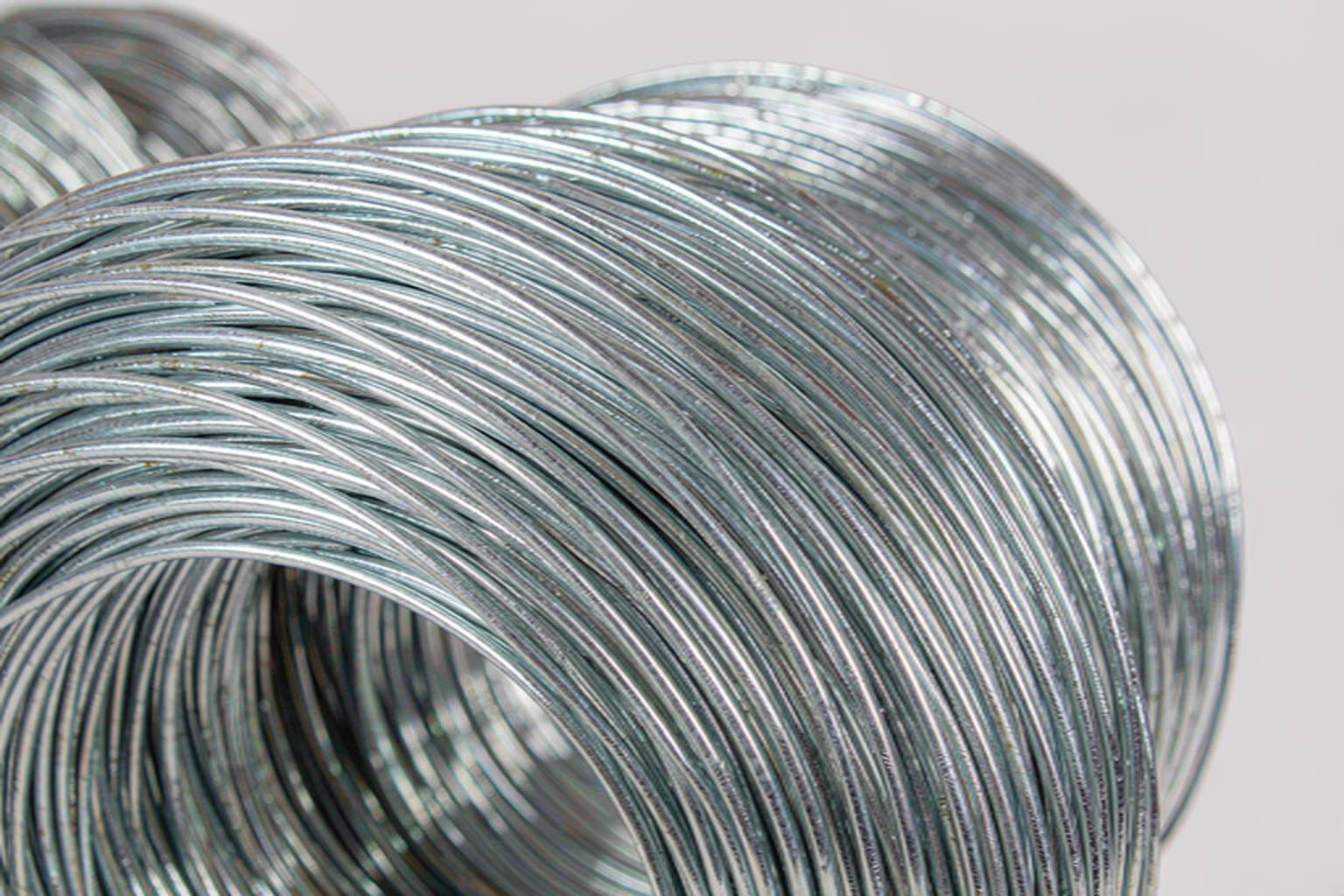
Galvanized wire carries a zinc layer bonded to the steel. In a hot-dip process the coating typically ranges from Z60 to Z300 g/m², while electro-galvanized wire applies a thinner, more uniform layer of roughly Z15. The zinc corrodes sacrificially — it oxidizes before the steel underneath — which is why galvanized wire can sit exposed for years and still hold its core strength.
PVC coated wire wraps the steel in a plastic jacket, usually 0.4–0.6 mm thick, over a thin base layer. The PVC forms a physical barrier that keeps water and air away from the metal, giving it vivid color options — green, blue, yellow, orange and grey — and a smooth, clean look that galvanized wire cannot match.
For pure corrosion resistance in harsh, wet or coastal conditions, galvanized wire is the safer long-term choice. A proper hot-dip zinc coating protects even where the surface is scratched, because the surrounding zinc keeps sacrificing itself. PVC protects only where the jacket is intact — once the coating is cut, cracked by UV, or scraped by handling, moisture can reach the steel at that single point and begin localized rusting behind the plastic.
That said, in mild, non-abrasive environments a well-applied PVC coating can look better and last longer than a thin electro-galvanized finish. The deciding factor is whether the wire will be scratched, stretched, or abraded in service.
When requesting quotations, verify these points. For galvanized wire, confirm the zinc coating weight (Z60 vs Z100 vs Z300) and the process (hot-dip vs electro), the wire diameter (commonly 0.45–6.0 mm, BWG 4–25), and the tensile strength (typically 350–550 MPa). For PVC coated wire, confirm the core wire diameter (around 0.7–3.5 mm), the finished outside diameter (1.0–4.0 mm), the coating thickness (0.4–0.6 mm) and the color. Specifying coating thickness and core diameter precisely yields a much more accurate quotation than simply asking for "PVC wire."
Galvanized wire is generally the more economical option at equal diameter, since zinc coating is a lower-cost process than applying a PVC jacket; the gap widens as coating thickness increases. Both are supplied on spools, coils or in bundles, with packing typically an inner plastic film plus an outer woven bag. Confirm coil weight and packing standard before comparing landed cost, since freight is charged on total weight, not coating value.
Galvanized wire generally lasts longer outdoors in wet, coastal or abrasive conditions, because zinc keeps protecting the steel even where the surface is scratched. PVC coated wire lasts better only in mild, non-abrasive environments where its jacket stays intact.
PVC coated wire resists rust as long as its plastic jacket is unbroken, but it is not rust-proof once cut or scratched — moisture can enter at a single nick and rust the steel underneath.
Choose PVC coated wire for garden tying, plant training and decorative work, because its smooth colored jacket is gentle on plants and blends into foliage. Galvanized wire suits exposed, load-bearing or high-abrasion fencing and lacing jobs.
PVC coated wire commonly has a coating thickness of 0.4–0.6 mm and is available in green, blue, yellow, orange and grey. Specify both the core wire diameter and the finished outside diameter when requesting a quotation.
For outdoor or coastal use, specify hot-dip galvanized wire with a coating weight such as Z60, Z100 or up to Z300 g/m². Electro-galvanized wire at roughly Z15 is thinner and better suited to indoor or light-duty applications.
View our PVC Coated Wire and Galvanized Wire product pages.
Email robin@foccred.com.
Or contact us on WhatsApp.
<< Previous Page
Next Page >>

Tianjin Foccred International Trade Co.,Ltd.


Contact Us
Tel:+86 151 1006 9033
Whats app:+86 151 1006 9033
Wechat:+86 151 1006 9033
E-mail:robin@foccred.com


Power by: cnwangju.com Sitemap
 +86 151 1006 9033
 +86 151 1006 9033
 robin@foccred.com
