

2026-11-19
Oval wire (also called oval baling wire or flat wire) is a low-carbon steel wire rolled into an oval cross-section instead of a round one. That flattened profile is what makes it the standard tying material for automatic cotton and straw balers: it feeds smoothly, holds a knot under high baling pressure, and packs more wire into a smaller, tighter coil than round wire of the same weight.
Oval wire starts as ordinary round low-carbon steel wire, then passes through pressure rollers that reshape it into a flat oval section. The rolling step does two things. First, it densifies the steel, which raises strength for the same diameter. Second, the oval shape lets each turn in a coil sit closer to the next, so a coil of a given weight is more compact and feeds with fewer jams on automatic baling machines.
Round wire rolls and slips under tension; oval wire stays put. In a cotton baler or scrap compactor the wire is pulled tight and tied under load, and a round section can slide in the knot and loosen. The flat faces of oval wire lock against each other, so the knot stays firm through storage and transport. For the same breaking force, oval wire also bends more predictably around the bale corners without springing back.
When you request a quote, the supplier needs four numbers: the cross-section (given as two dimensions, major × minor diameter in millimetres), the breaking force, the zinc coating, and the coil length. These four decide whether the wire runs cleanly on your specific baler.
| Specification | Cross-section | Breaking force | Zinc coating | Diameter tolerance | Standard length |
|---|---|---|---|---|---|
| 17 × 15 | 3.0 × 2.4 mm | 700 kgf | min. 80 g/m² | ±0.06 mm | 1000 m |
| 16 × 14 | 2.7 × 2.2 mm | 600 kgf | min. 80 g/m² | ±0.06 mm | 1250 m |
| 15 × 13 | 2.4 × 2.0 mm | 500 kgf | min. 80 g/m² | ±0.06 mm | 1500 m |
| 14 × 12 | 2.2 × 1.8 mm | 400 kgf | min. 80 g/m² | ±0.06 mm | 1900 m |
Heavier cross-sections such as 17 × 15 are made to order for high-density cotton or scrap bales, with breaking forces up to 1550 kgf available. Coil length is normally supplied at 500 m, 1000 m or 1250 m to match your baling equipment's spool capacity.
Most oval baling wire is supplied hot-dip galvanized, which puts a heavier, more uniform zinc layer on the wire than electro-galvanizing. This matters because bales are often stored outdoors or in humid sheds, and the tie wire must survive months of exposure without rusting. The wire is packed in plastic film inside a woven bag to keep the coil clean and dry in transit.
Match the cross-section to your baler. A section too large jams the knotter; too small snaps under tension. Give the supplier your baler model or the wire size currently in use.
Confirm the coil weight and length. A coil that does not fit your spool causes downtime on the line.
State the bale type and density. Cotton, straw and scrap all need different breaking force, so the right spec depends on what you compress.
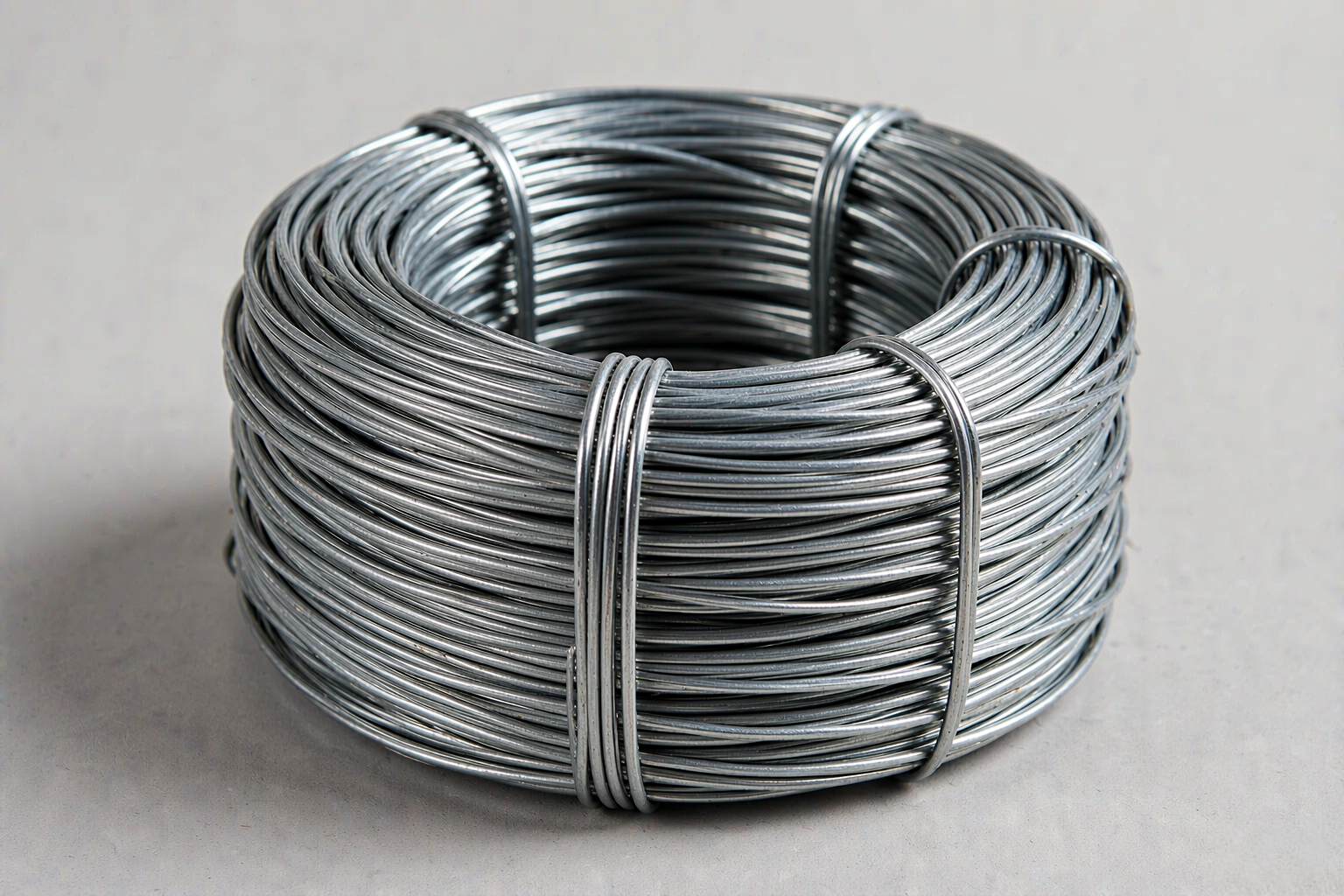
Oval wire is generally the better choice for automatic baling because its flat cross-section holds knots firmly and coils more compactly, which reduces jams and downtime compared with round wire.
Choose the size by matching the cross-section and breaking force to your baler and bale density — heavier, denser bales need a larger section and higher breaking force, while light straw needs a smaller, lighter wire.
Buy hot-dip galvanized oval wire if the bales will be stored outdoors or for more than a few weeks, because the heavier zinc layer prevents rusting; uncoated wire is only suitable for very short indoor storage.
FOCCRED supplies hot-dip galvanized oval baling wire in cross-sections from 14 × 12 to 17 × 15 with breaking forces from 400 to 1550 kgf, for cotton, straw and scrap baling. Send your required cross-section, breaking force, coil length and destination for a tailored quotation.
View our Oval Wire product page.
Email robin@foccred.com.
Or contact us on WhatsApp.
<< Previous Page
Next Page >>

Tianjin Foccred International Trade Co.,Ltd.


Contact Us
Tel:+86 151 1006 9033
Whats app:+86 151 1006 9033
Wechat:+86 151 1006 9033
E-mail:robin@foccred.com


Power by: cnwangju.com Sitemap
 +86 151 1006 9033
 +86 151 1006 9033
 robin@foccred.com
